
Day Four: Karachi to Yangon
We left off in Pakistan, where the security check treated us to a masterclass in peak efficiency. Our luggage was searched not once, not twice, but three full times. Only after the Captain stepped in with a pointed reminder that we were minutes from missing our departure window did they reluctantly wave us through to the plane.
Waiting for us at the aircraft were two armed guards, one stationed in front and one behind. For good measure, three more officers stood at five-meter intervals along the walk to the plane, each ready to conduct their own inspection. Not entirely sure what they were after. Perhaps they had caught wind of a recent gold discovery in Uzbekistan.
Our flight to Myanmar took us over Nagpur, India, for a quick fuel stop. While the outside air felt like an oven, the plane’s battery quietly drained, leading to yet another kick-start. This time it became a high-stress affair: the landing strip was closing in five minutes and we needed to go. The delay in Pakistan had nearly cost us an extra 1.5 hours on Indian soil. In the end, we made it out just in time.
The flight to Myanmar served up a concoction of scenarios usually reserved for simulator training: GPS spoofing, GPS jamming, and weather. The GPS system was unusable, and a thunderstorm needed to be circumnavigated at the same time. The plane was brought down safely on the tarmac. Or, according to the GPS, on top of the ATC tower.
We wrapped up the day with a quick dinner at a local Myanmar restaurant before heading to bed.
Day Five: Yangon
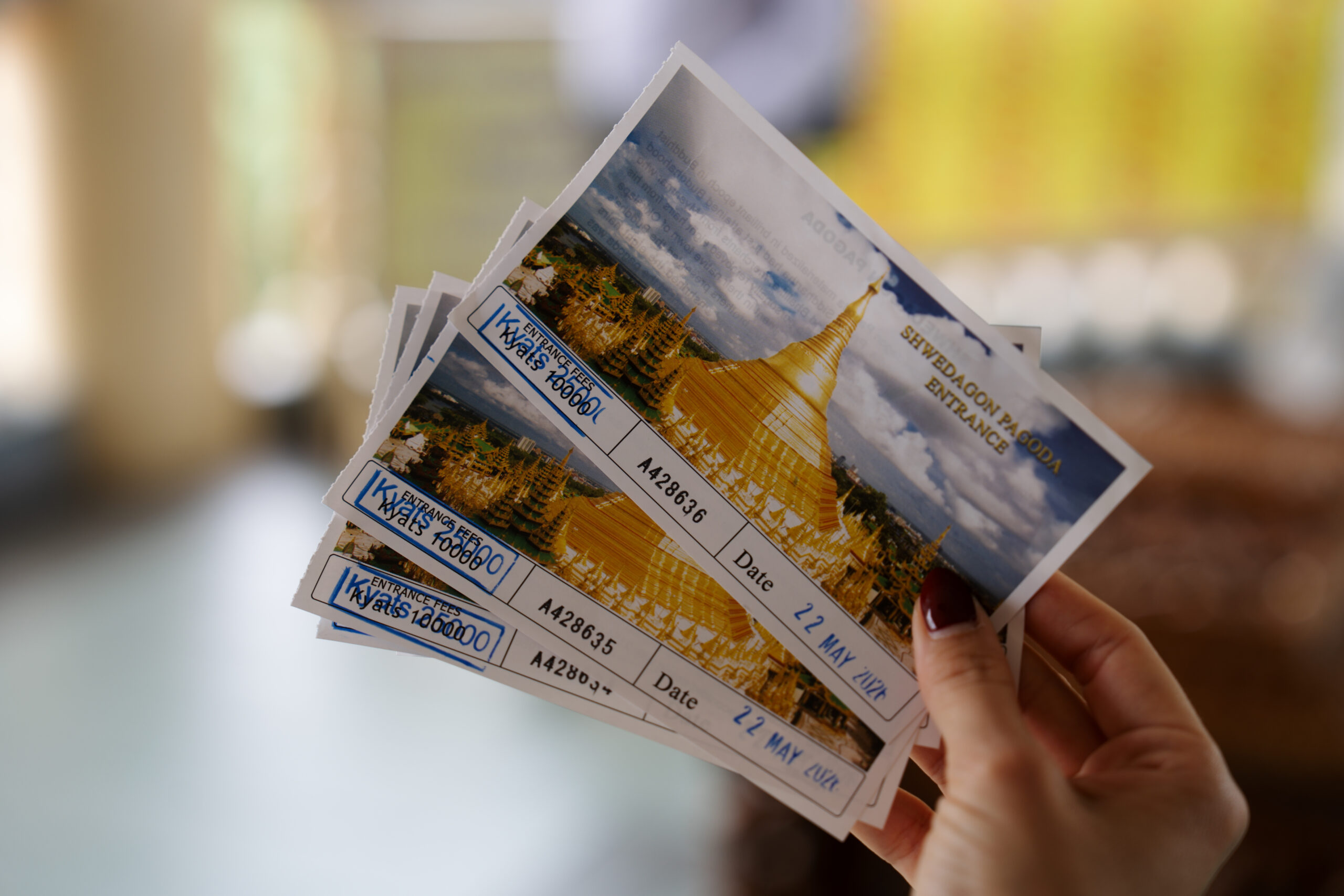
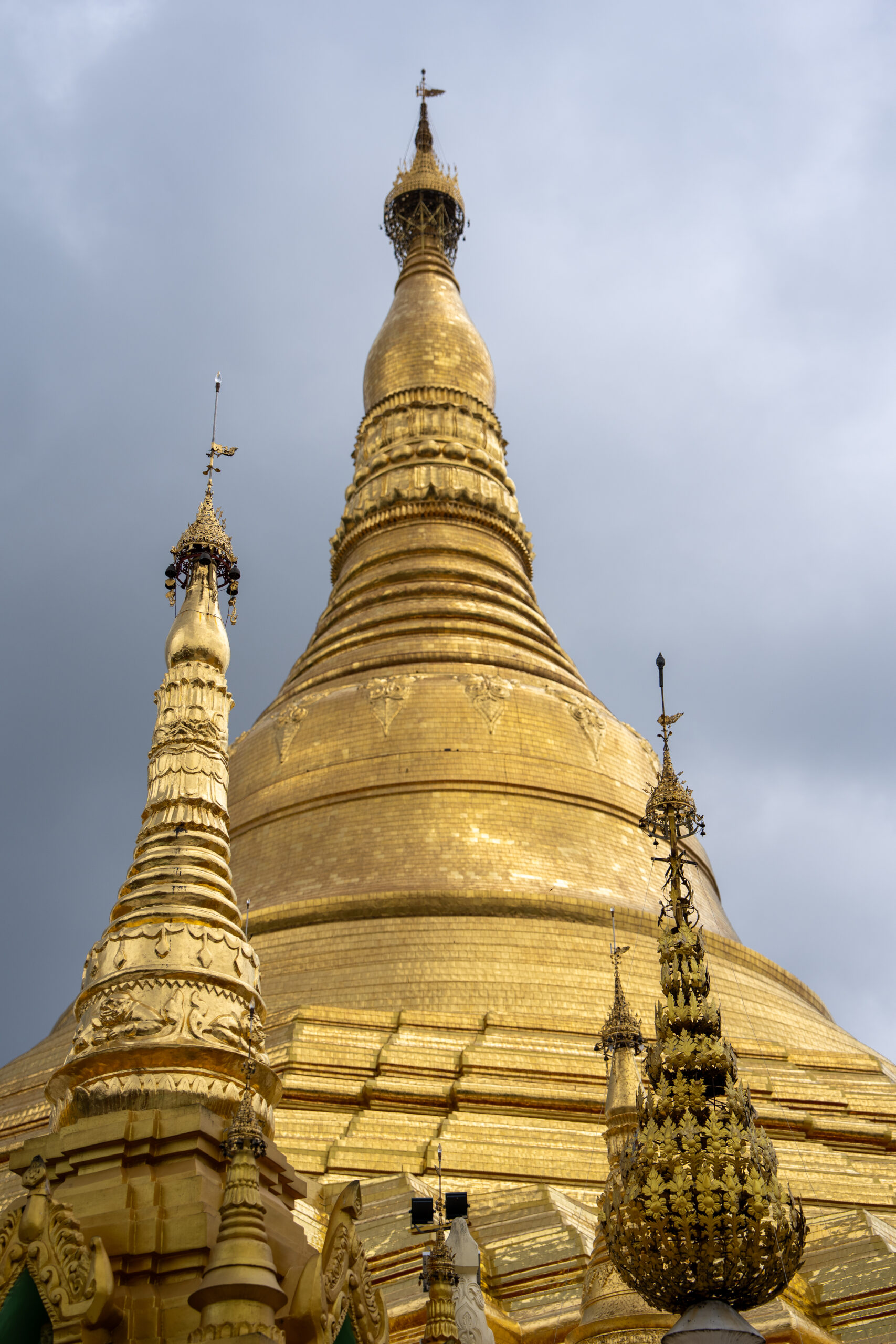
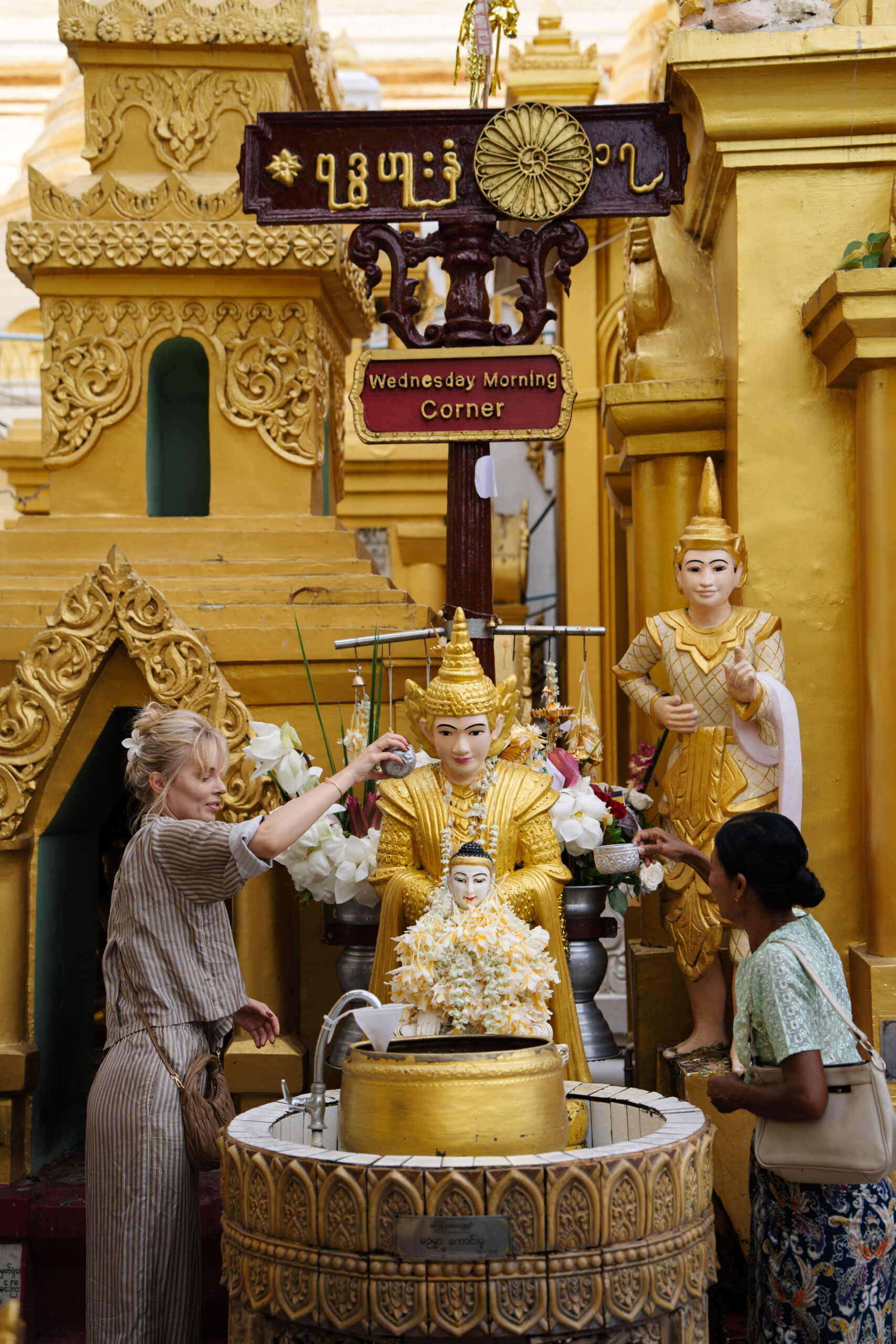
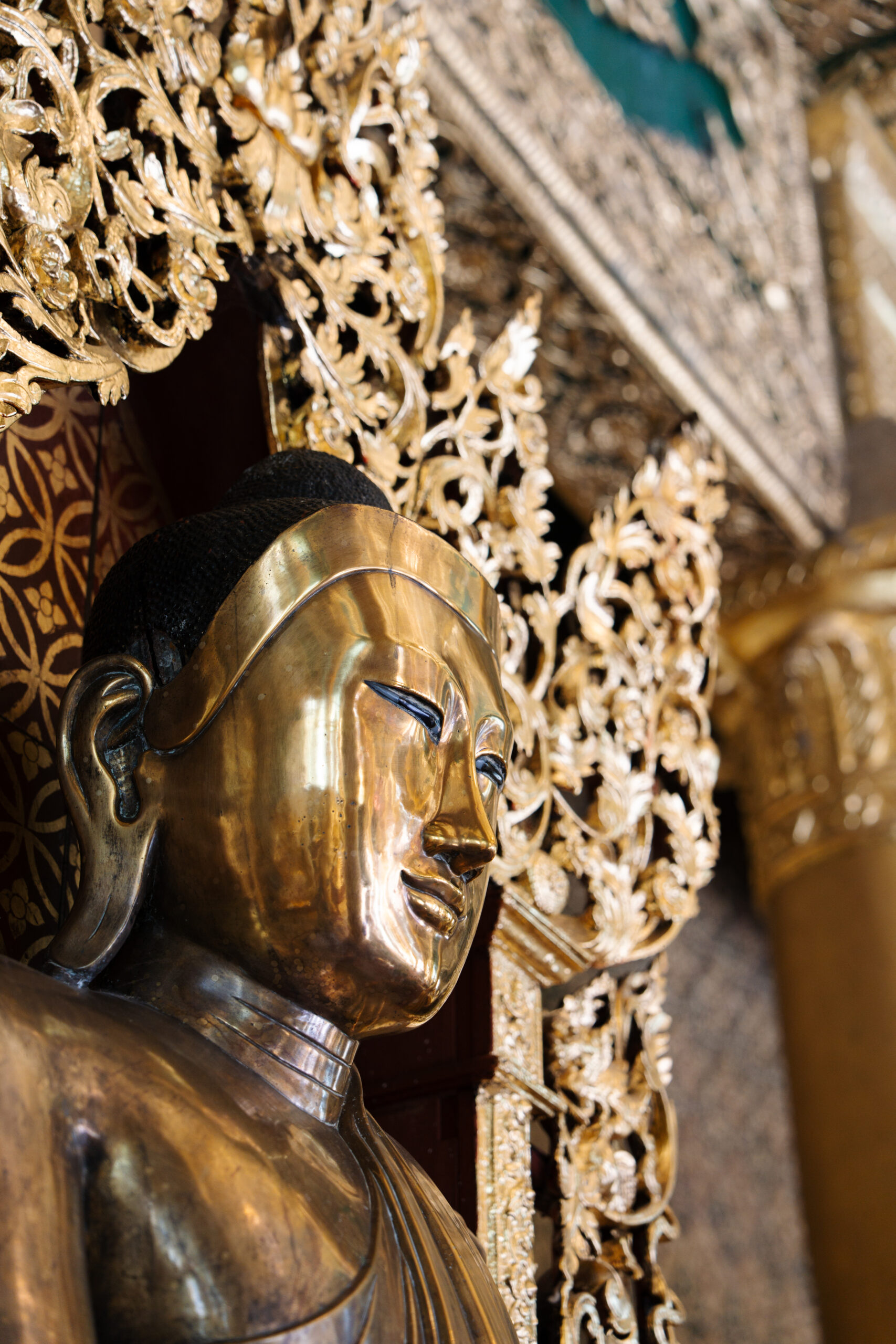
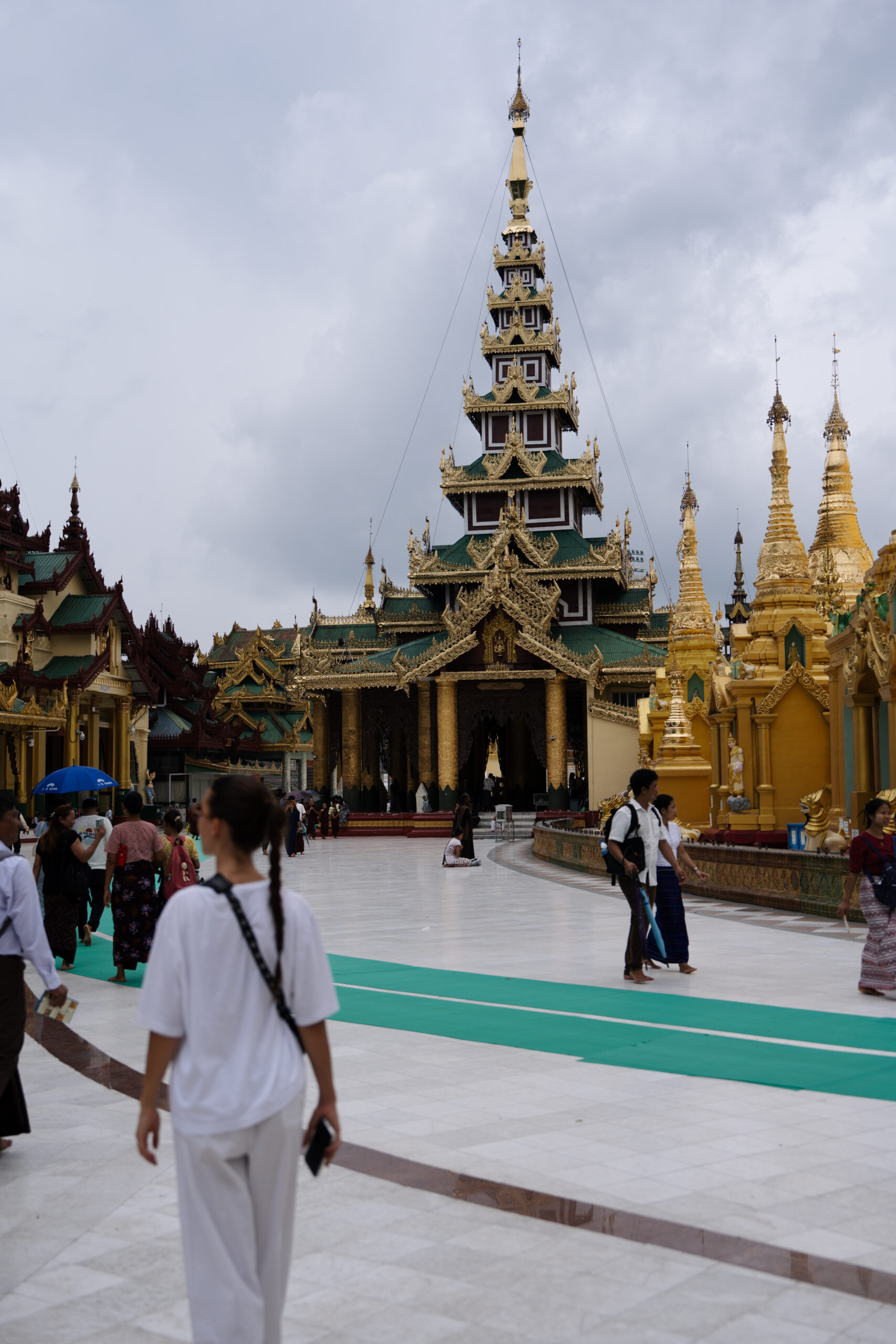
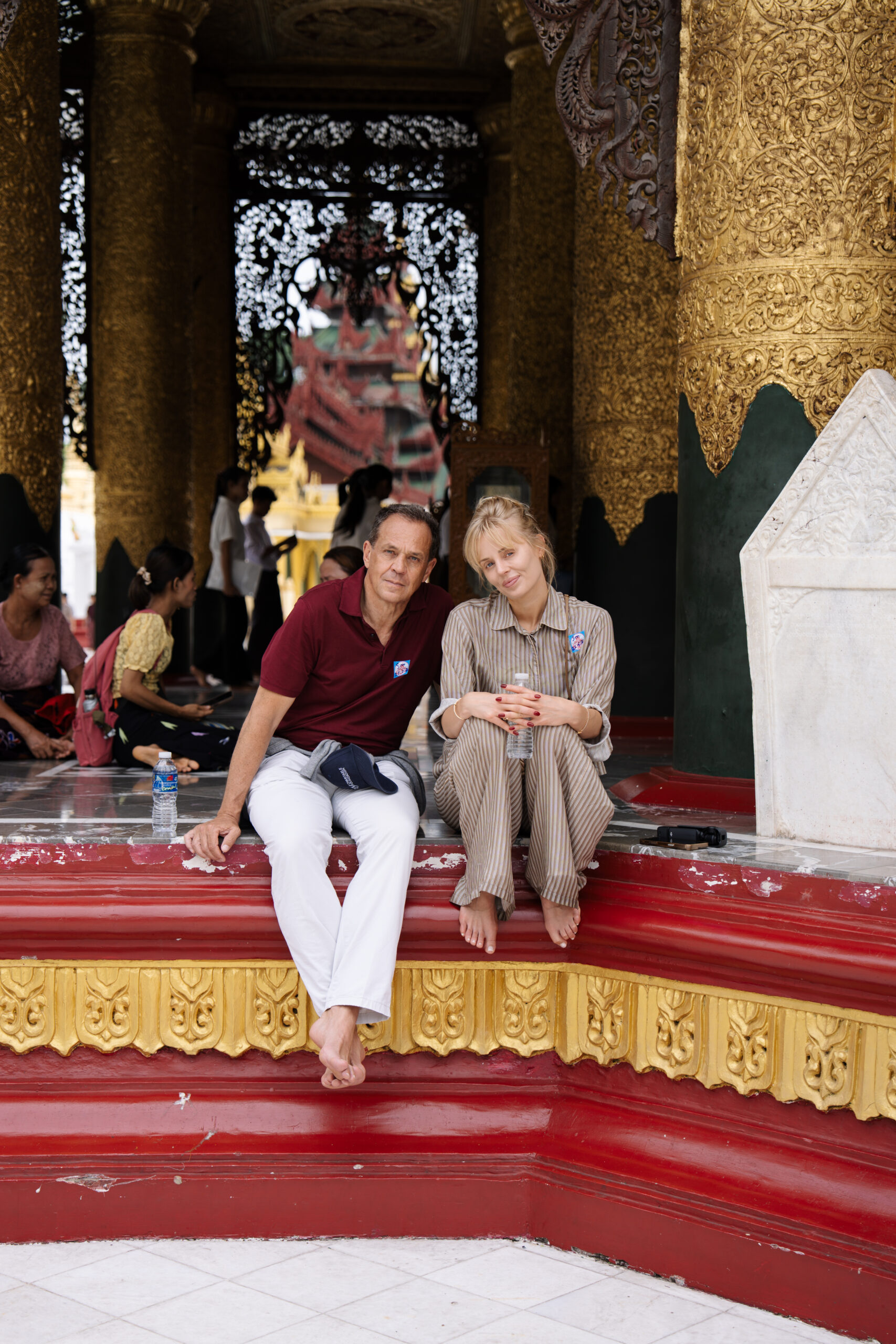
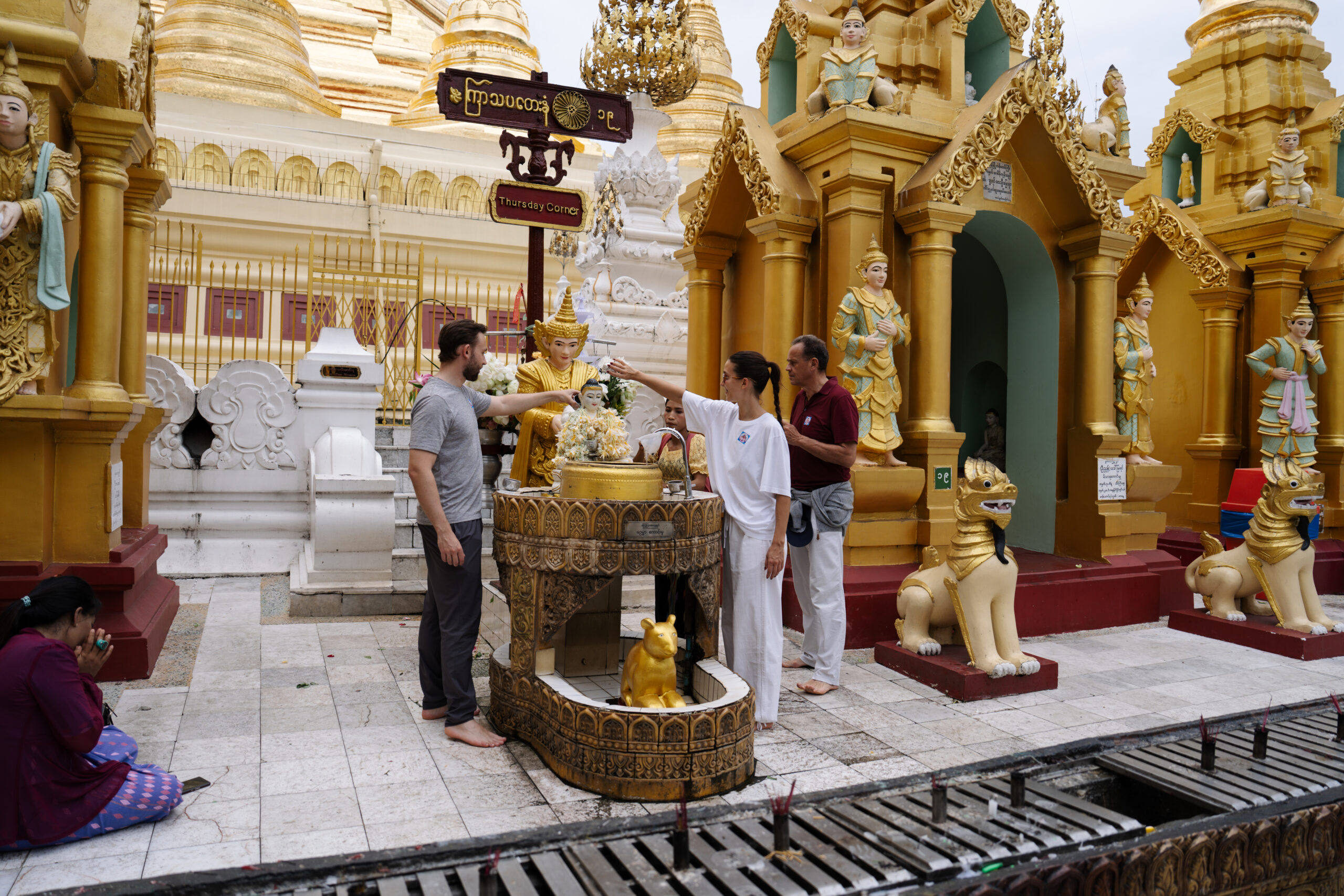
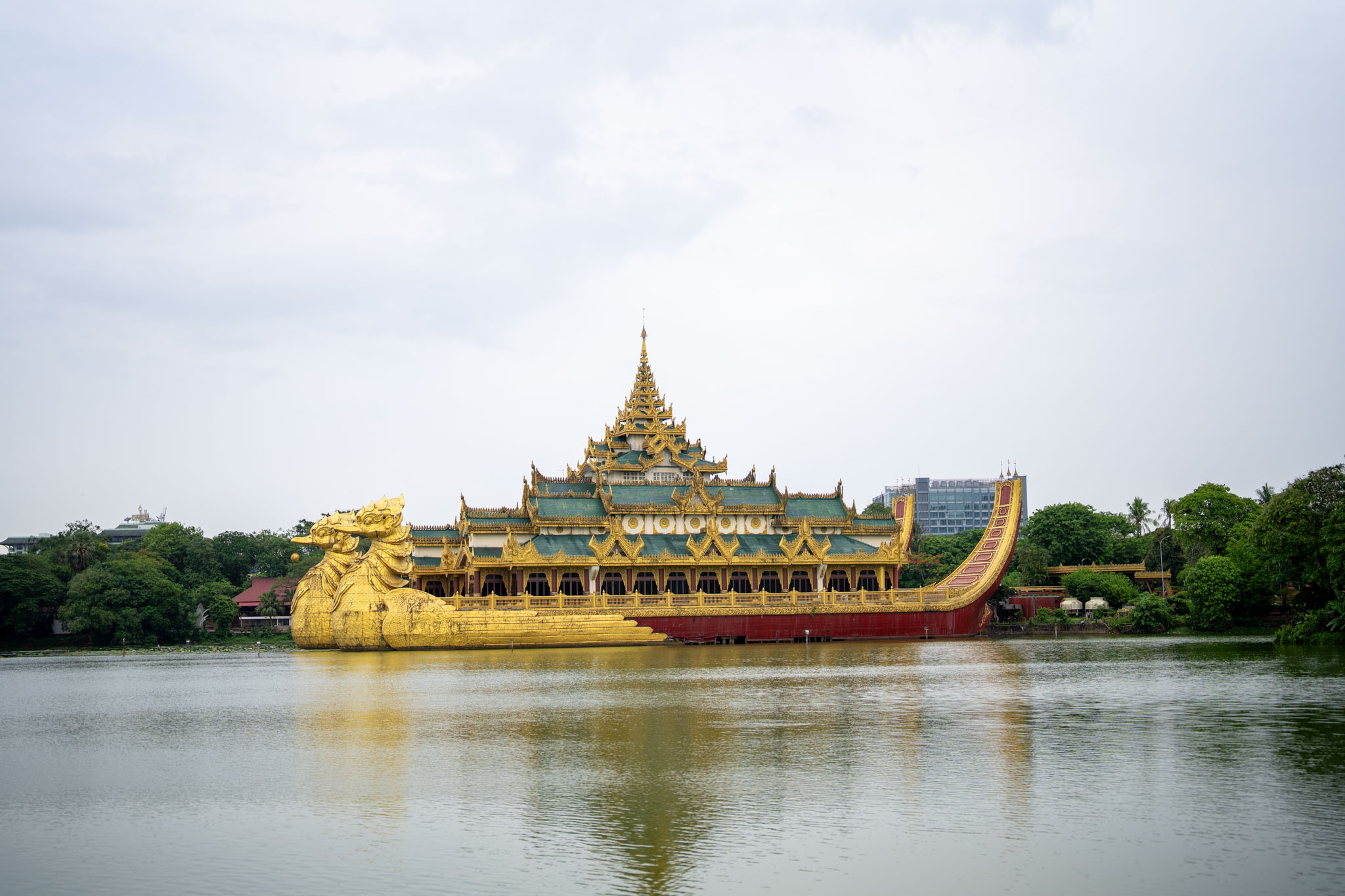
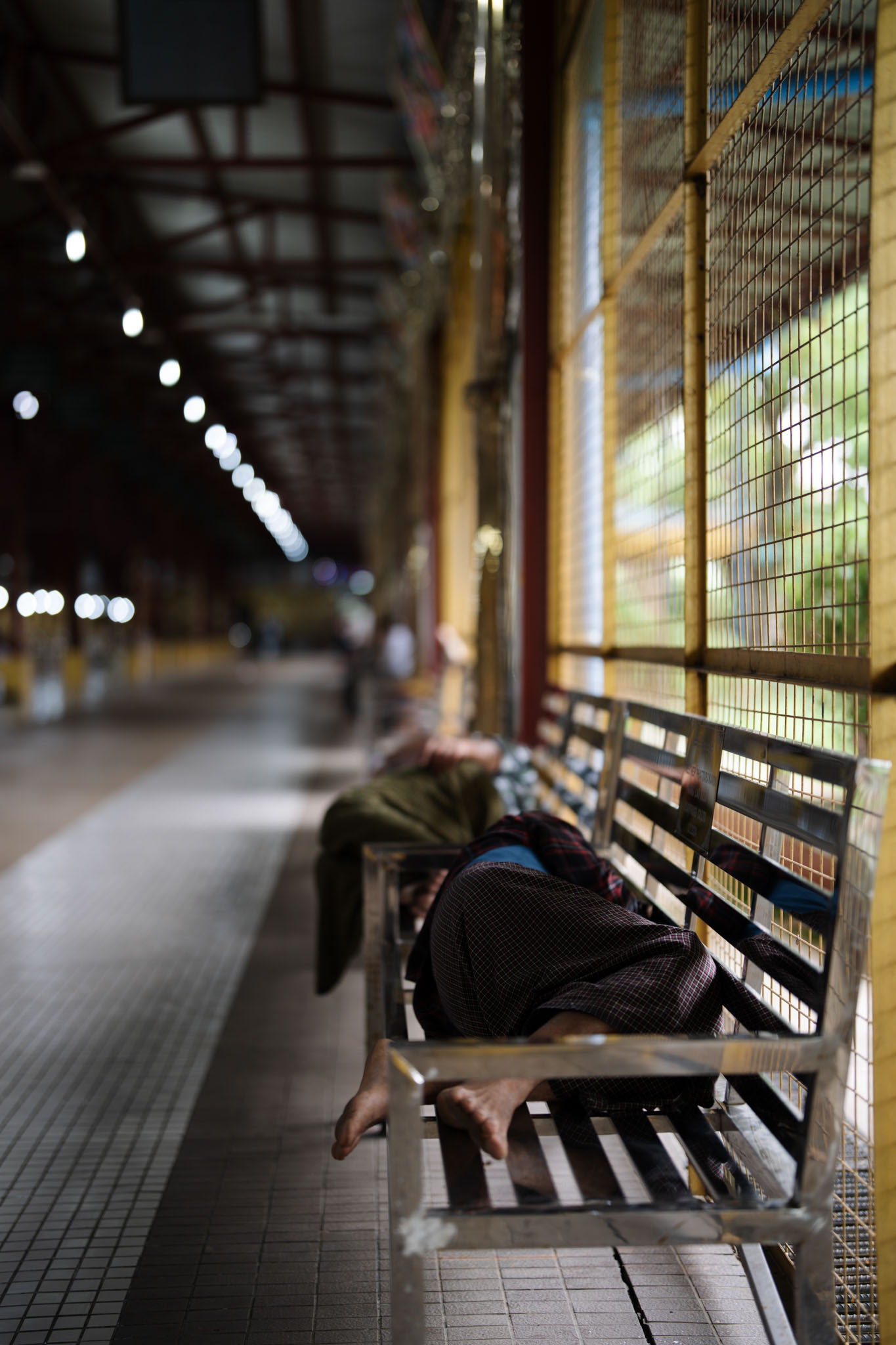
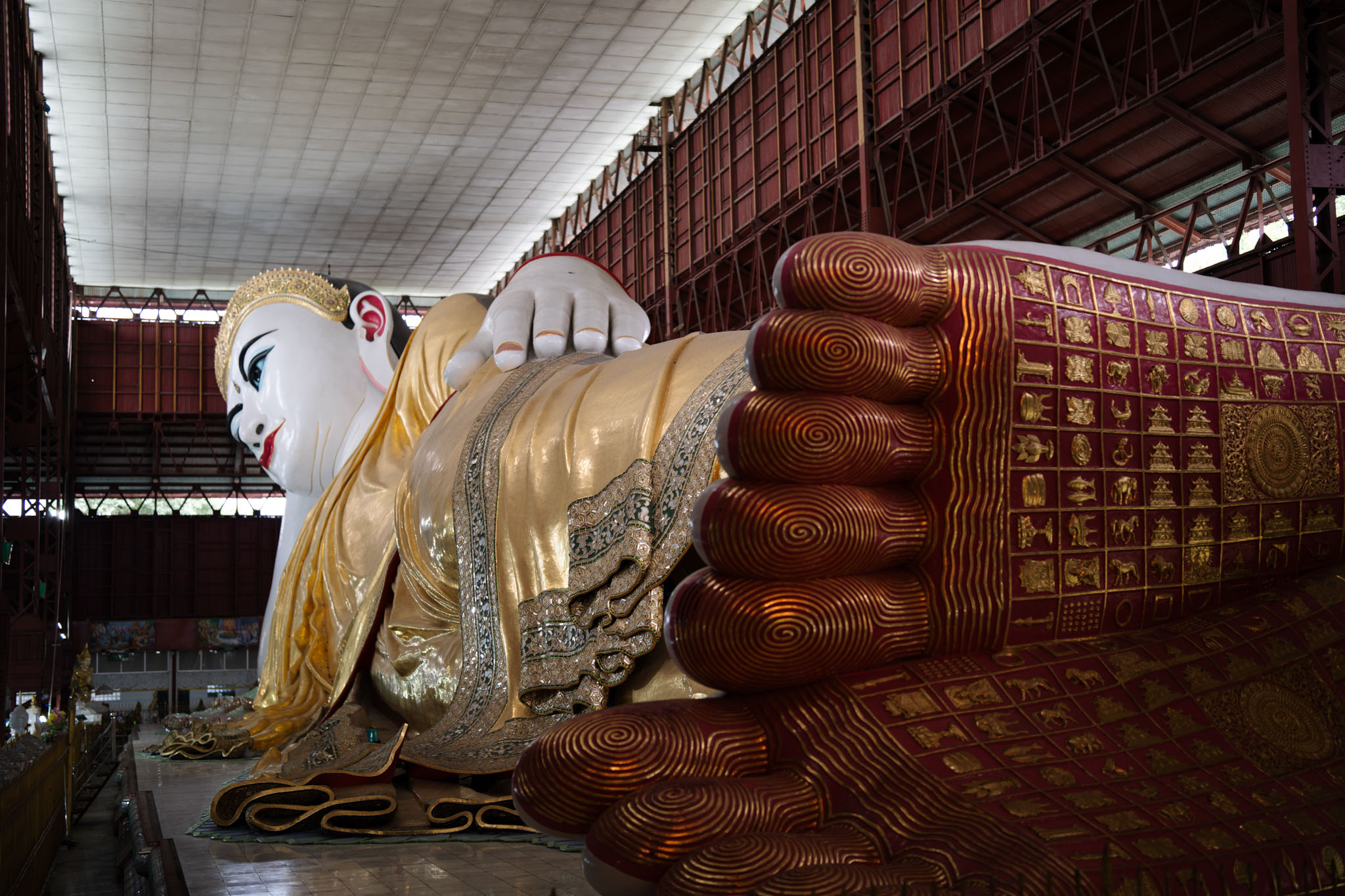
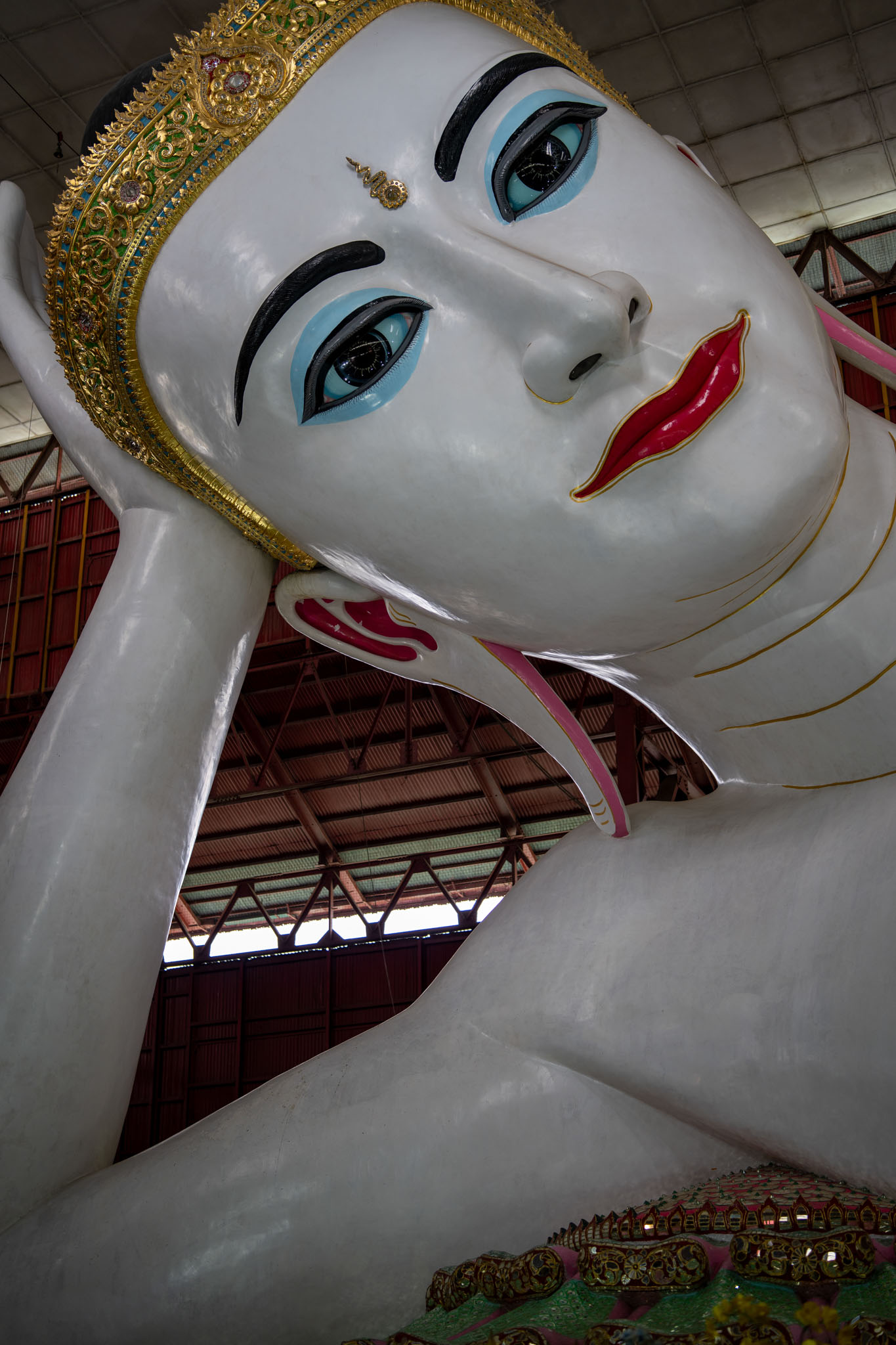
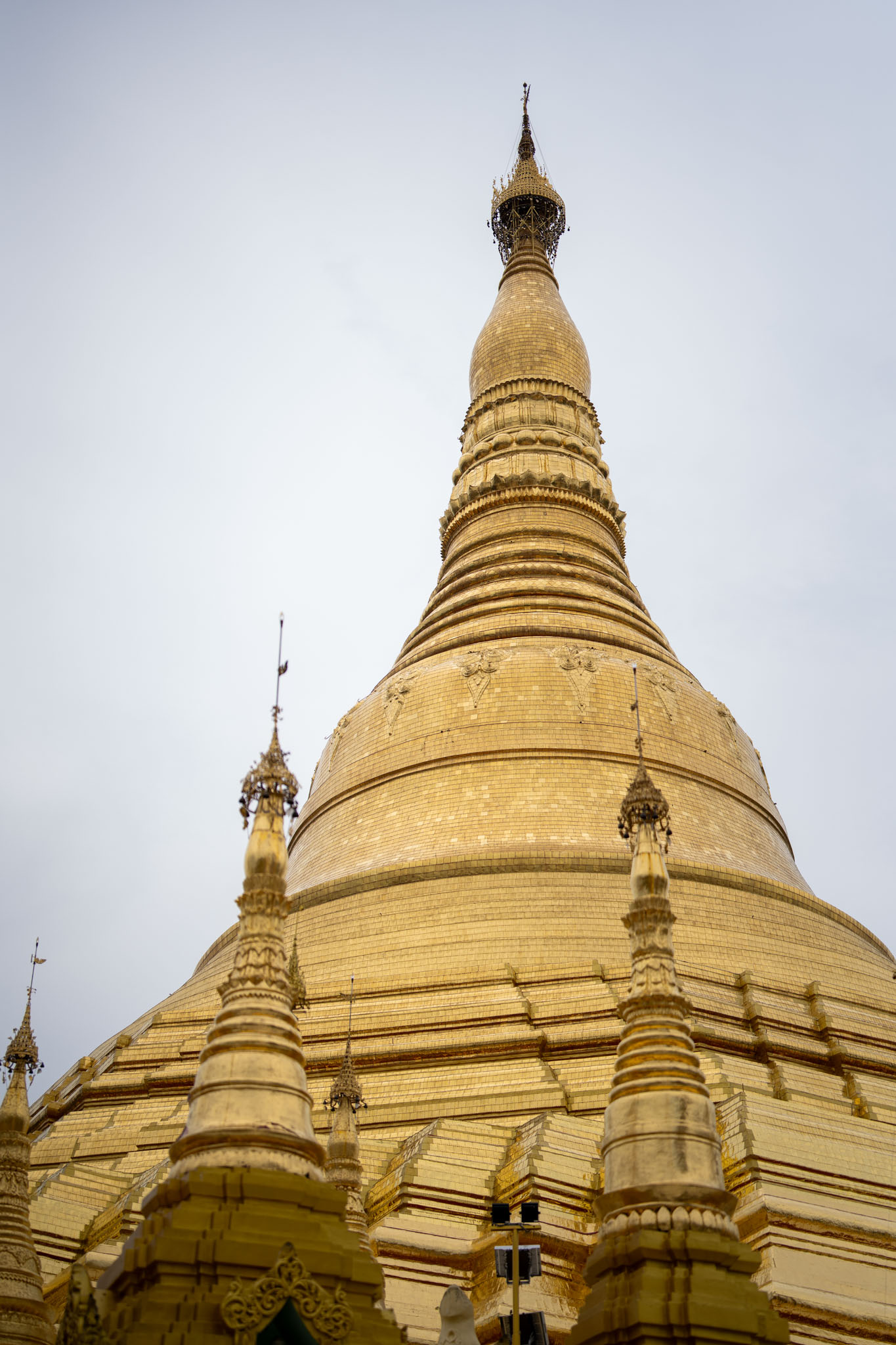
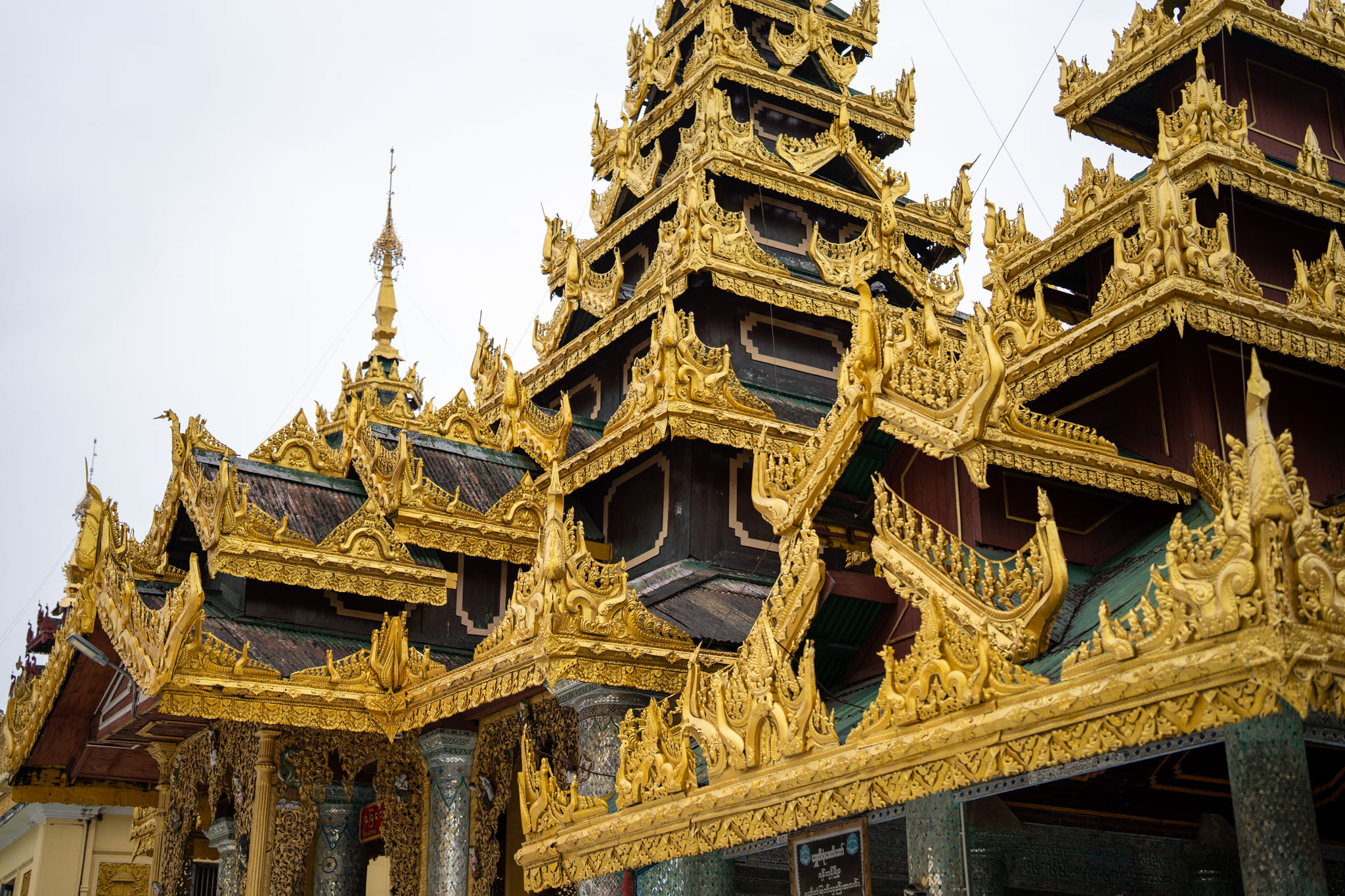
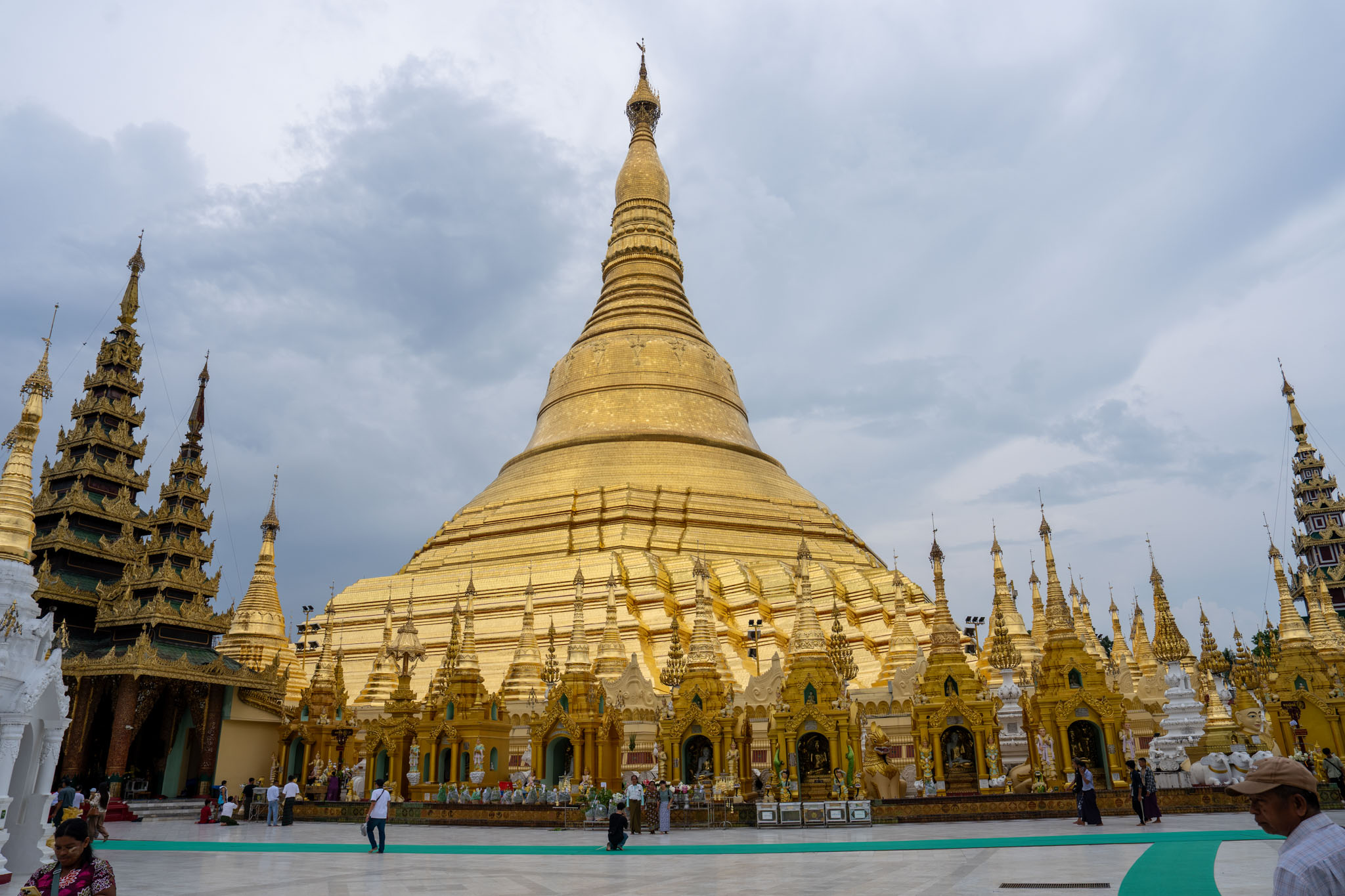
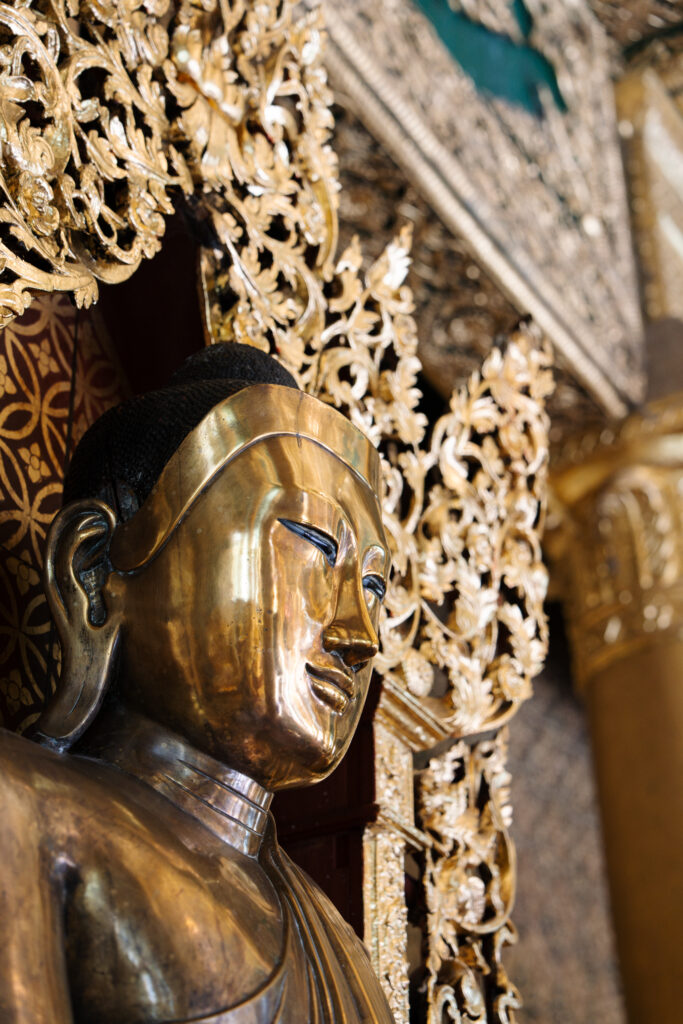
Our second day in Myanmar was reserved for sightseeing. First stop was the Shwedagon Pagoda, Myanmar’s most sacred Buddhist site and a towering gilded stupa that dominates the Yangon skyline. From there we moved on to a local market, the enormous reclining Buddha at Chaukhtatgyi, and the Karaweik, an ornate barge-shaped pavilion sitting on Kandawgyi Lake. At the market, one of the travelers spent an impressive amount of time haggling for local lacquerware, only to discover that the seller does not ship to Switzerland. Driven by an unwavering devotion to local art, he resolved that Lakeside Aviation would henceforth serve as his personal DHL. Much to the dismay of the chief pilot. Whether the goods will actually reach their destination remains an open question.
We wrapped up the evening at the Rangoon Tea House, treating ourselves to an unexpected mix of Japanese and local dishes before heading back to the hotel for the night.
Yangon, sometimes romanised in English as Rangoon, is the capital of the Yangon Region and the largest city of Myanmar. Yangon was the capital of Myanmar until 2005 and served as such until 2006, when the military government relocated the administrative functions to the purpose-built capital city of Naypyidaw in north central Myanmar. With over five million people, Yangon is Myanmar’s most populous city and its most important commercial centre. Yangon boasts the largest number of colonial-era buildings in Southeast Asia, and has a unique colonial-era urban core that is remarkably intact. The colonial-era commercial core is centred around the Sule Pagoda, which is reputed to be over 2,000 years old. The city is also home to the gilded Shwedagon Pagoda – Myanmar’s most sacred and famous Buddhist pagoda. Wikipedia
Yangon grew out of a settlement around the Shwe Dagon Pagoda that eventually became known as Dagon. Its status was raised to that of a town by the Mon kings in the early 15th century. When King Alaungpaya (who founded the last dynasty of Myanmar kings) conquered southern Myanmar in the mid-1750s, he developed Dagon as a port and renamed it Yangon (“The End of Strife”), a name that was later transliterated as Rangoon by Arakanese interpreters accompanying the British. Rangoon was taken by the British at the outbreak of the First Anglo-Burmese War in 1824 but was restored to Burmese control two years later. The city was taken again in 1852 by the British, who made it the administrative capital of Lower Burma. After the British annexation of all of Burma in 1886, Rangoon became the capital city and grew in importance. The city was known abroad as Rangoon until 1989, when the government of Myanmar requested that Yangon, a transliteration reflecting the Burmese pronunciation of the city’s name, be used by other countries. Encyclopedia Britannica
Yangon is Myanmar’s main centre for trade and handles more than 80 percent of the country’s foreign commerce. Rice, teak, and metal ores are the principal exports. The city is also the centre of national rail, river, road, and air transportation; an international airport is located at Mingaladon, north of Yangon. Yangon is located in Lower Burma at the convergence of the Yangon and Bago Rivers about 30 km away from the Gulf of Martaban. Yangon is the most ethnically diverse city in the country. While Indians formed the slight majority prior to World War II, today the majority of the population is of indigenous Bamar (Burman) descent. In the 2020s, life in Yangon was greatly affected by the COVID-19 pandemic and the 2021 coup d’état; the city was the location of mass protests in response to the coup, and the pandemic and protests prompted the authorities to enforce a series of lockdowns and curfews, with the city’s economy subsequently slowing. Encyclopedia Britannica Wikipedia
Reference: Wikipedia.org under https://en.wikipedia.org/wiki/Yangon
Myanmar is a country located in the western portion of mainland Southeast Asia. In 1989 the country’s official English name, which it had held since 1885, was changed from the Union of Burma to the Union of Myanmar; in the Burmese language the country has been known as Myanma since the 13th century. The English name of the city that served as the country’s capital from 1948 to 2006, Rangoon, also was dropped in 1989 in favor of the common Burmese name, Yangon. In 2005 the government began to shift its administrative center, first to the city of Pyinmana (some 200 miles north of Yangon) and then to Nay Pyi Taw (Naypyidaw), a newly constructed city near Pyinmana. Nay Pyi Taw was proclaimed the capital of Myanmar in 2006. Myanmar is bordered by China on the north, Laos on the east, Thailand on the southeast, Bangladesh on the west, and India on the northwest, with the Andaman Sea to the south, and the Bay of Bengal to the southwest. There are over 2,000 kilometres of coastline. Encyclopedia BritannicaWikipedia
The first human settlers in Myanmar appeared in the central plain some 11,000 years ago. By the mid-9th century, Pagan had emerged as the capital of a powerful kingdom that would unify Myanmar and inaugurate the Burman domination of the country that has continued to the present day. The Second Anglo-Burmese War (1852) was provoked by the British, who wanted access to the teak forests in and around Bago and also wanted to secure the gap in their coastline stretching from Calcutta to Singapore; it resulted in the British annexation of Bago province, which they renamed Lower Burma. In 1885 Britain declared war on Myanmar for the third and final time, annexing the rest of the country. Myanmar became independent in 1948 as the Union of Burma, and had a democratic government at first. The country was ruled by a military junta led by General Ne Win from 1962 to 1988. The Tatmadaw again seized power in a 2021 coup d’état, which led to the rule of the National Defence and Security Council and its new military junta, the State Administration Council. The coup, which was widely condemned by the international community, led to continuous ongoing widespread protests in Myanmar and has been marked by violent political repression by the military, as well as the outbreak of a civil war. Encyclopedia Britannica + 3
Stretching from latitude 10° N to about 28° 30′ N, Myanmar is the northernmost country of Southeast Asia; it is shaped like a kite with a long tail that runs south along the Malay Peninsula. Myanmar slopes from north to south, from an elevation of 19,296 feet (5,881 meters) at Mount Hkakabo (the country’s highest peak) in the extreme north to sea level at the Irrawaddy and Sittang river deltas. The country as a whole can be divided into five physiographic regions: the northern mountains, the western ranges, the eastern plateau, the central basin and lowlands, and the coastal plains. Myanmar’s economy is one of the least developed in the region and is primarily agricultural; nearly half of the country’s economic output was nationalized in the 1960s, and the country has an extensive informal economy. The country is rich in cultural diversity, with over 135 ethnic groups recognized by the government, each contributing to its unique tapestry of traditions, languages, and customs. Buddhism is the predominant religion of Myanmar, practiced by about 88 percent of the population. Encyclopedia Britannica + 2
Reference: Wikipedia.org under https://en.wikipedia.org/wiki/Myanmar