
Days Nine – Twelve: Holidays in Sanya
We left early in the morning for Sanya, on the southern tip of Hainan Island. On paper, this should have been a twenty-minute flight. In practice, it took an hour and twenty.
The reason is that Chinese airspace operates on a principle that can be charitably described as selective. We were not, it turned out, permitted the direct route. Instead, we were sent the long way around the mainland before being allowed to “hop over” to Hainan.
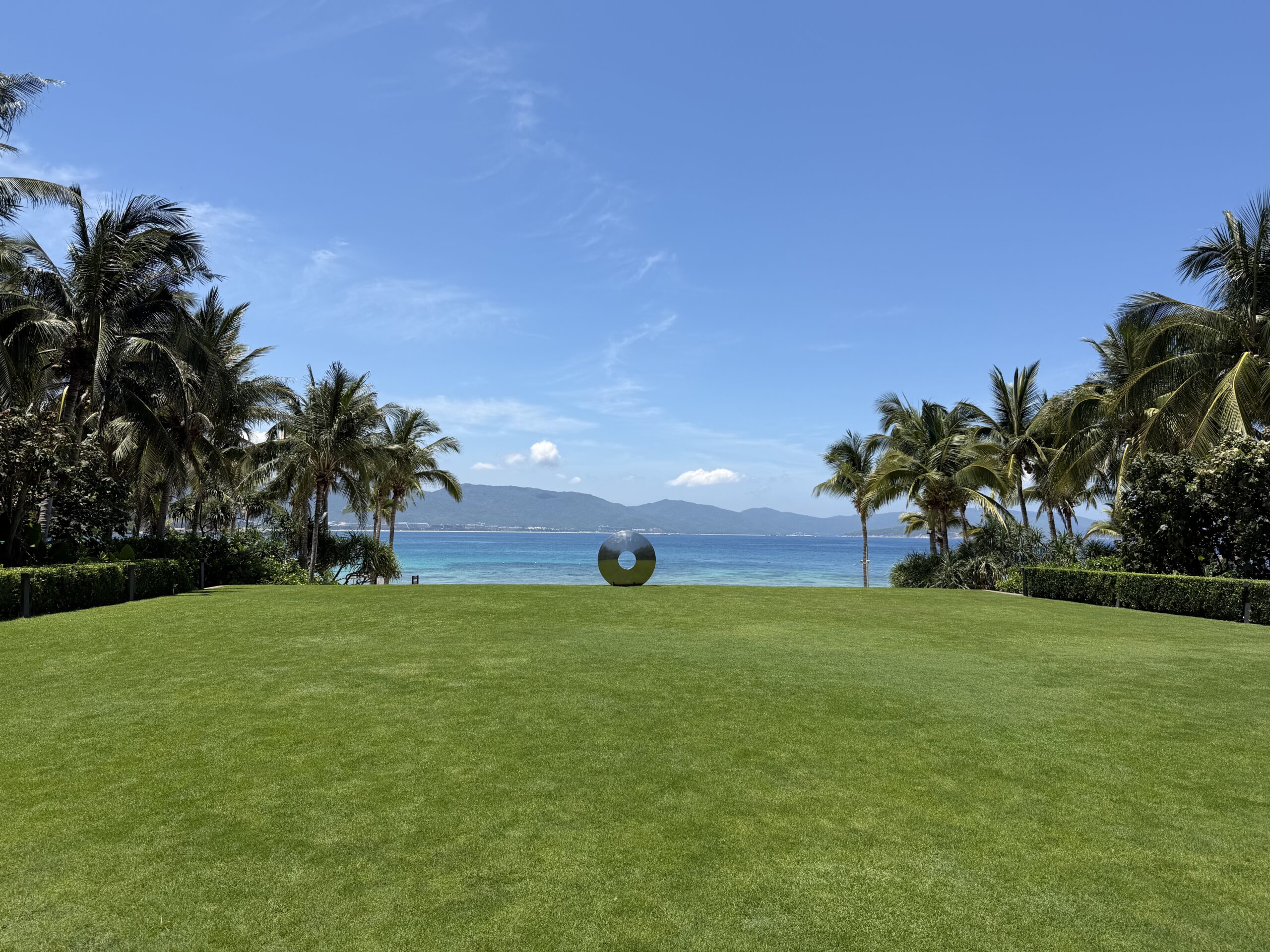
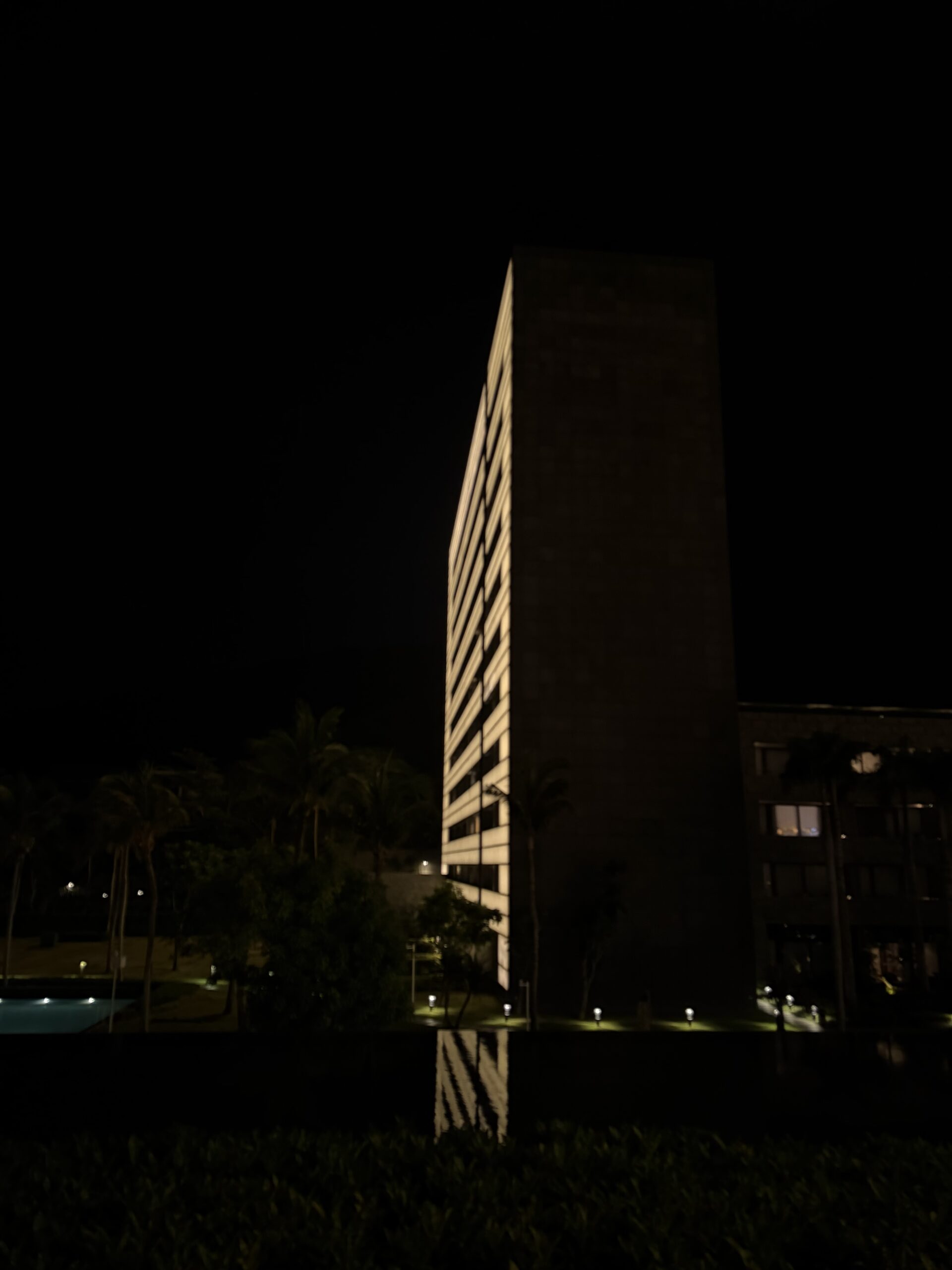
The flight itself produced its own small novelty. China is one of the few jurisdictions in the world that measures altitude in meters rather than feet. After landing in Sanya we checked into the Park Hyatt for what was, by any honest accounting, two days of doing very little.
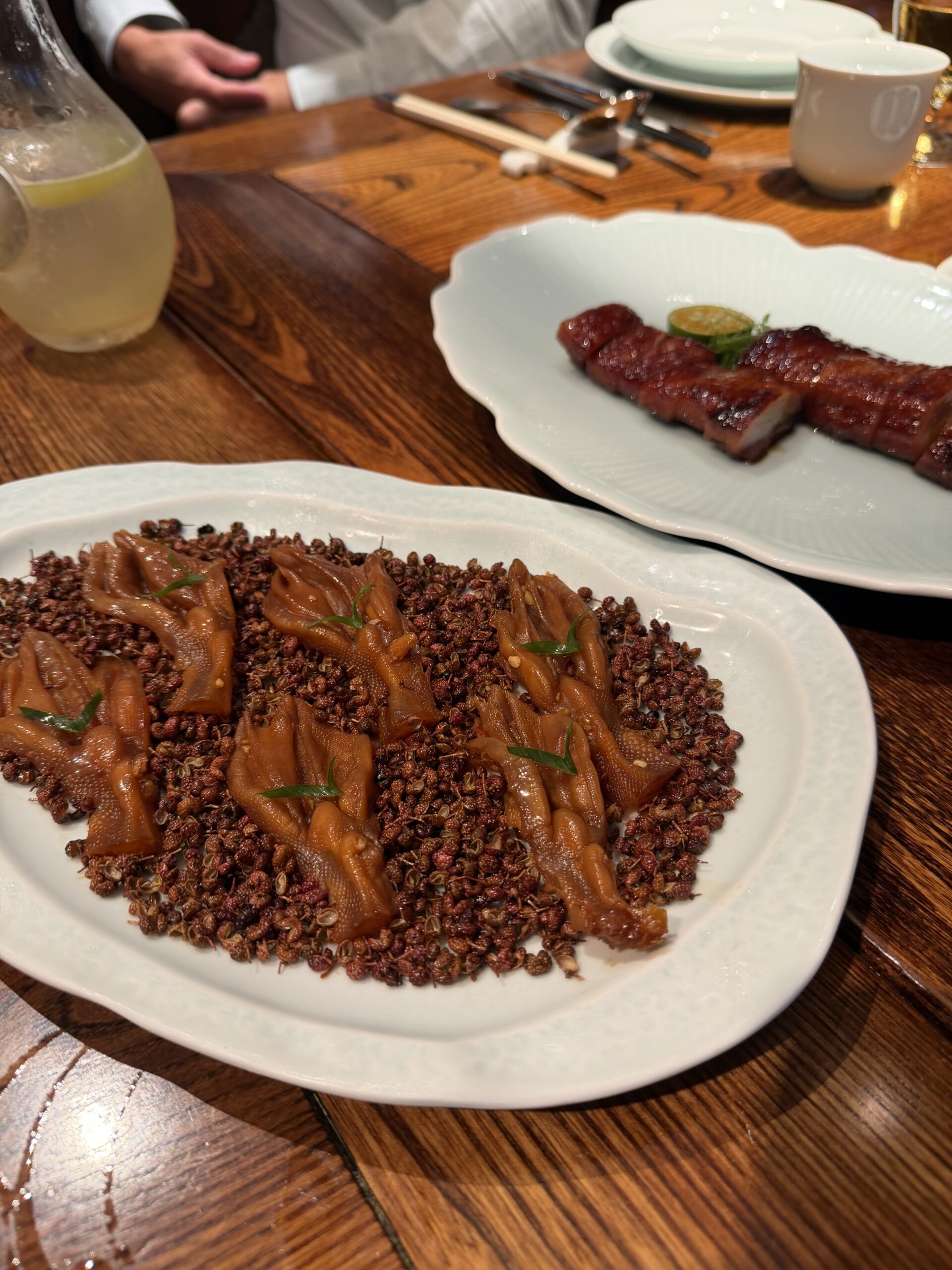
The one mild adventure of the trip was dinner on the arrival night. The plan had been to eat at the hotel’s Chinese restaurant, on the perfectly reasonable theory that the Chinese restaurant in China was likely to be the best restaurant in China. The Chinese restaurant was fully booked. We ate at the steak restaurant instead, which was perfectly fine, but probably entirely interchangeable with the steak restaurant at every other Park Hyatt on earth.
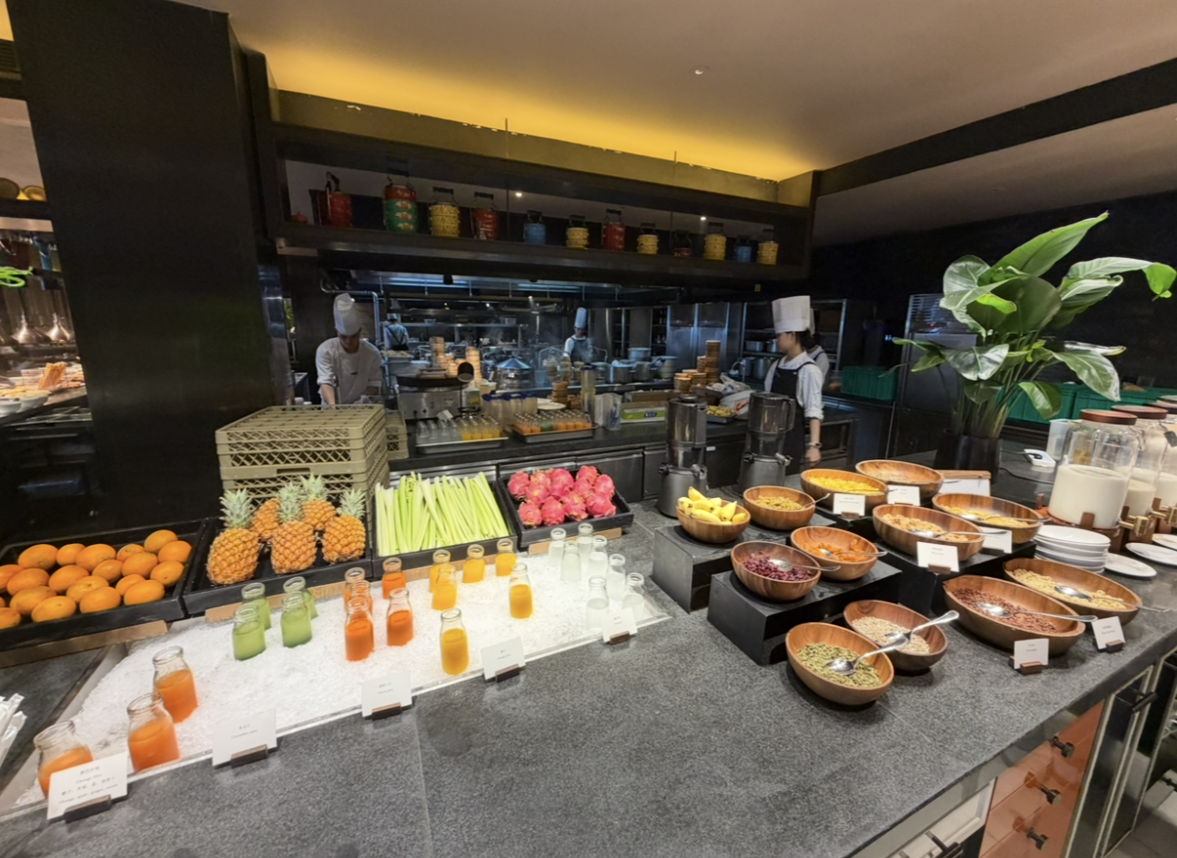
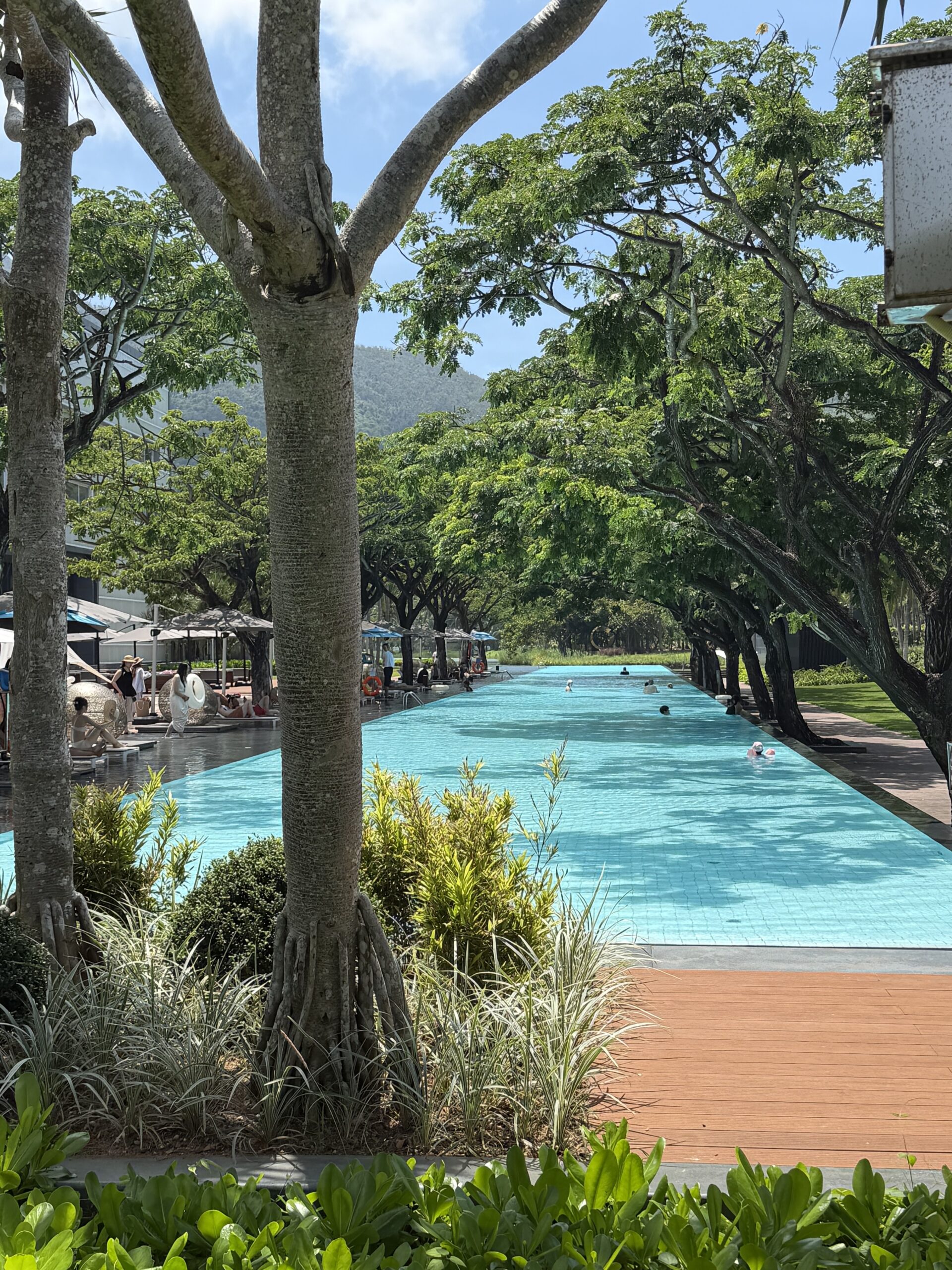
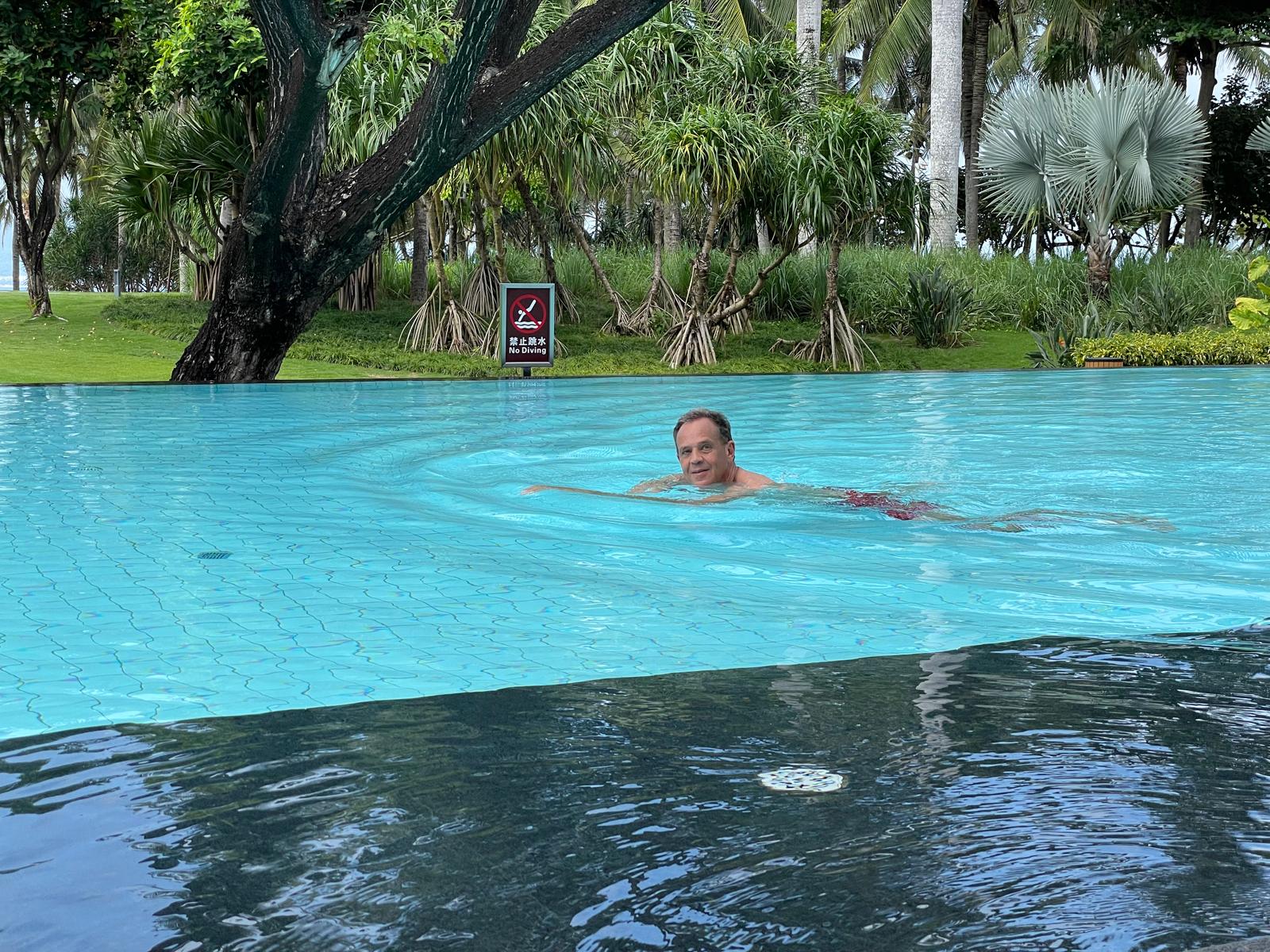
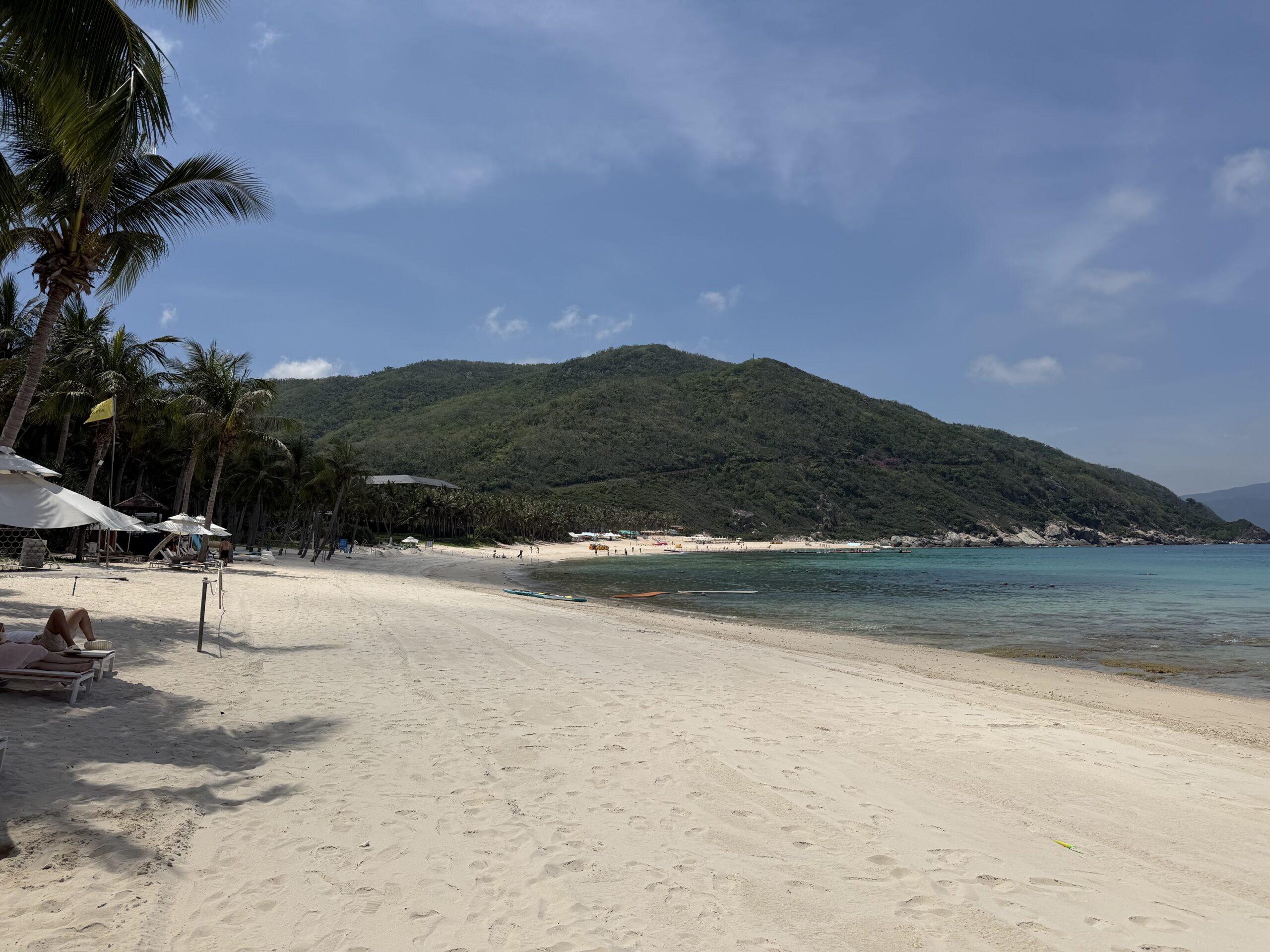
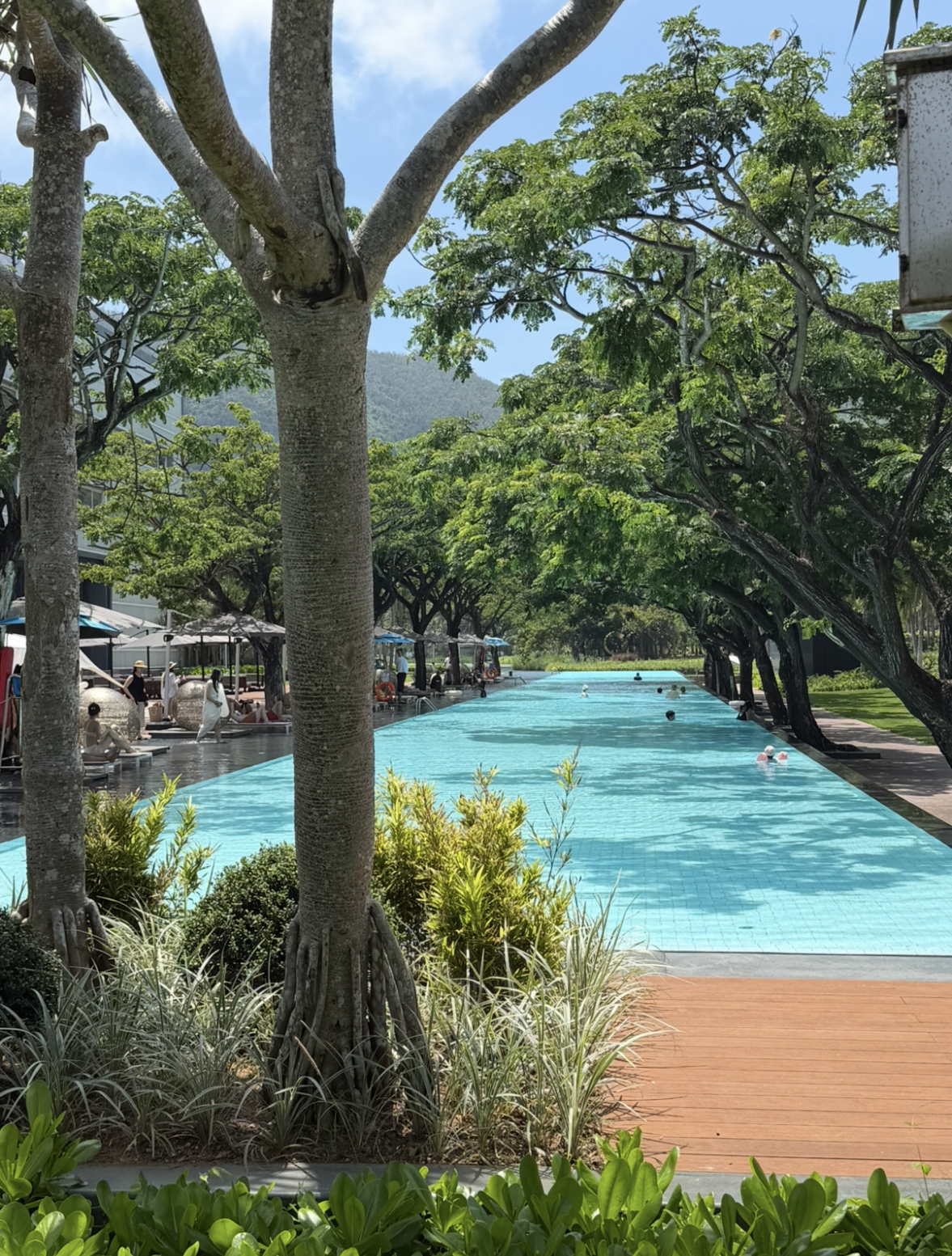
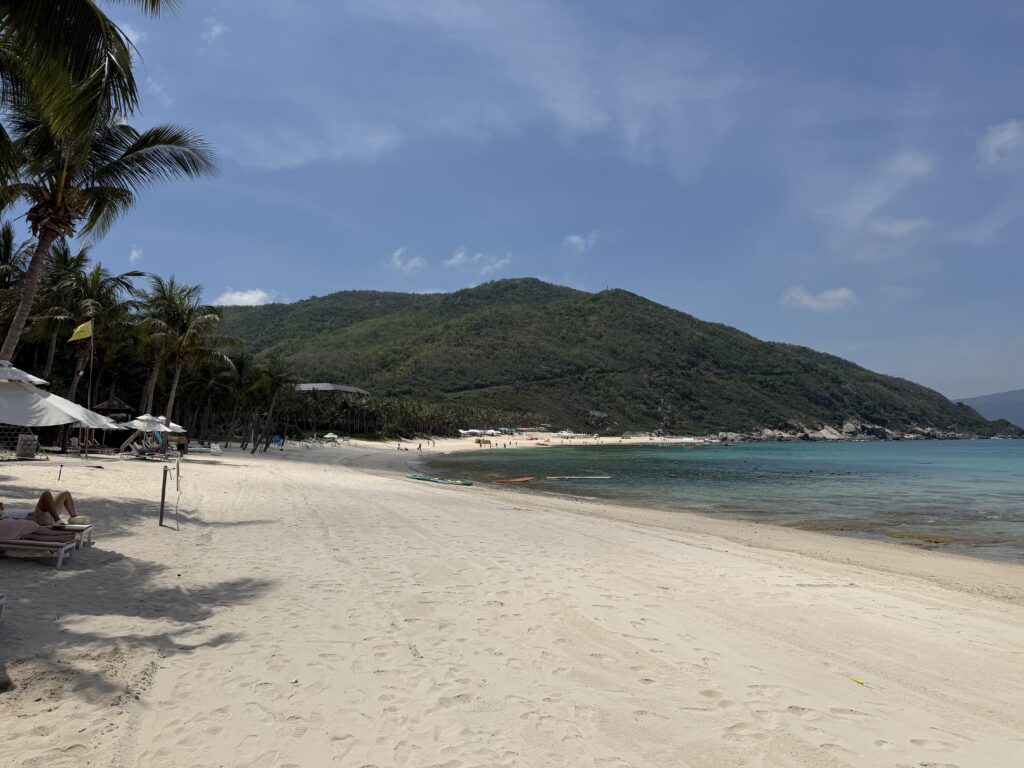
The hotel itself did most of the work. Mornings began with yoga and the breakfast buffet, after which it was every man for themselves. Some played tennis. Some went to the beach. There were various other amenities, none of which required us to think about anything demanding.
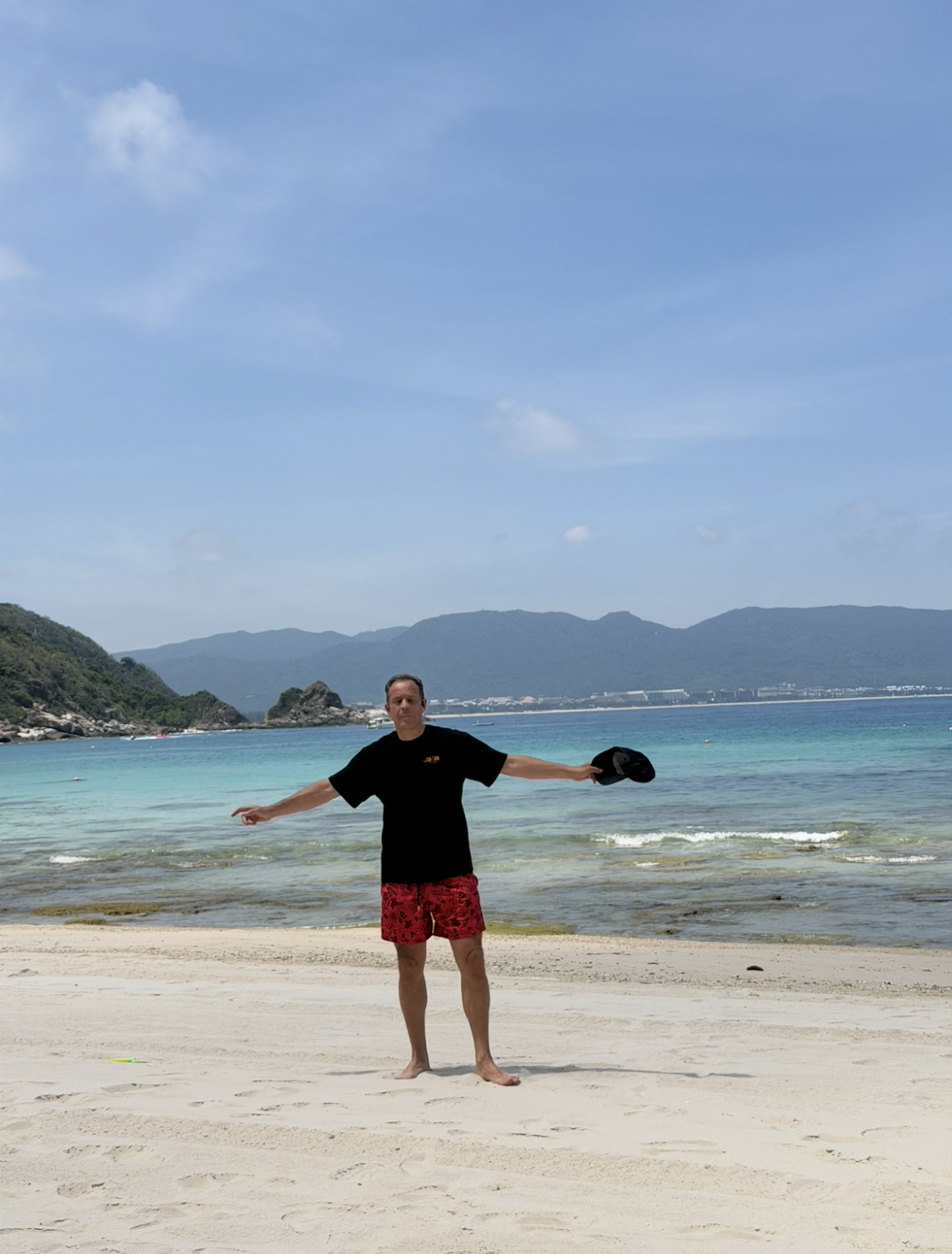
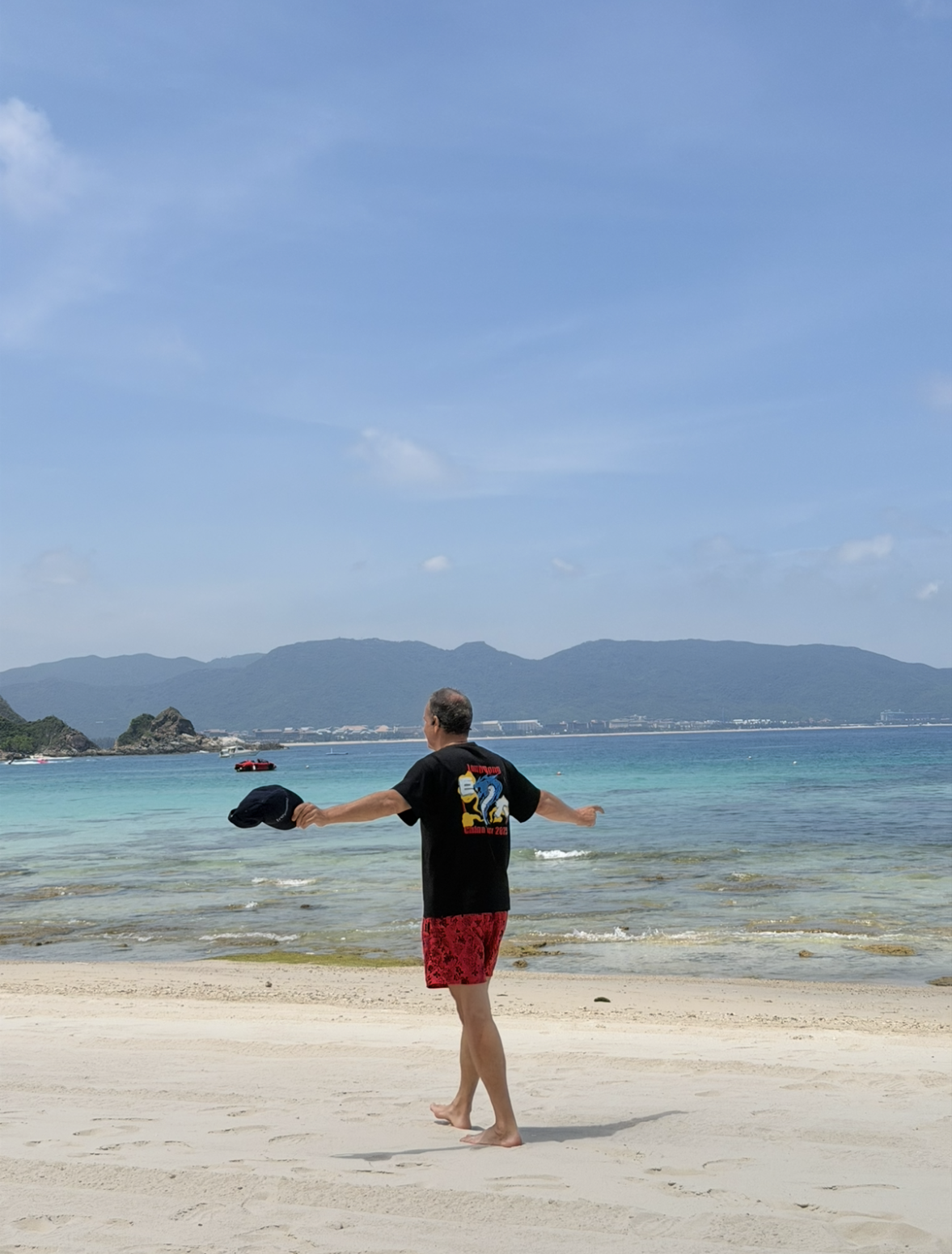
The second day was, by design, identical to the first. Yoga, buffet, pool, beach. The weather was incredibly warm and humid, but this mini vacation resulted in no one leaving the hotel. On the final evening we packed up and prepared to leave for Okinawa the next day, feeling slightly more rested than before.
Sanya is a resort city and the southernmost city on Hainan Island, and one of the four prefecture-level cities of Hainan Province in South China. It is a major tourist destination with several large scale resorts and contains the Sanya coral reef, a national protected nature reserve spanning 4000 hectares. Phoenix Island, an artificial island with a seven-star resort and a complex of five-star hotels, is in Sanya Bay. The Guanyin of Nanshan, a Buddhist statue of Guanyin, is the thirteenth tallest statue in the world and is located in Sanya. According to the 2020 census, the total population of Sanya was 1,031,396 inhabitants, living in an area of 1,919.58 km2. The city is renowned for its tropical climate and has emerged as a popular tourist destination, also serving as the training site of the Chinese national beach volleyball team. Wikipedia
Sanya lies at the southern tip of Hainan Island on Sanya Bay. Located at 18° 15′ N latitude, Sanya is—after Sansha (also administered by Hainan Province)—the second-southernmost prefecture-level city nationally. Though the administrative area has a rough topography, the city itself is generally flat, lying on a parcel of land between low-level mountains to the north and the South China Sea. The area has a tropical wet and dry climate, featuring hot weather all year round. Monsoonal influences are strong, with a relatively lengthy wet season and a pronounced dry season. Historians can trace the city’s history back to 221 BC and the Qin Dynasty. The city, as part of a remote island in the far south of China, was occupied by Japanese invaders from 1941 to 1945, during the Second Sino-Japanese War. As part of Sanya’s identity, this city is also home to the Chinese Hui minority (the only Muslim group in Hainan), also called the “Utsuls”, inhabiting the countryside but increasingly forming part of the city’s population. WikipediaVisit Our China
In recent years Sanya has become a popular tourist destination. Numerous international five star luxury hotel and resort chains are now established in the area. In 2009, the luxury Mandarin Oriental, Sanya hotel opened in the Dadong Hai area, the first Mandarin Oriental property on Hainan Island. Atlantis Sanya opened in 2018, becoming the first Atlantis branded hotel in China. There are now over 100 hotels, ranging from international brands to locally managed resorts. Russian and English signs can be seen throughout the city. The city is served by Sanya Phoenix International Airport. The Hainan East Ring Intercity Rail links Sanya and Haikou and runs along the east coast of Hainan Island, with travel time from Sanya to Haikou approximately 1 hour and 22 minutes. In 2007, the Beijing Olympic Organizing Committee announced that the city of Sanya would become the first leg of the 2008 Summer Olympics torch relay in China. Wikipedia + 2
Reference: Wikipedia.org under https://en.wikipedia.org/wiki/Sanya
China is a country of East Asia. It is the largest of all Asian countries. Occupying nearly the entire East Asian landmass, it covers approximately one-fourteenth of the land area of Earth, and it is almost as large as the whole of Europe. China is also one of the most populous countries in the world, rivaled only by India, which, according to United Nations estimates, surpassed it in population in 2023. China has 33 administrative units directly under the central government; these consist of 22 provinces, 5 autonomous regions, 4 municipalities (Chongqing, Beijing, Shanghai, and Tianjin), and 2 special administrative regions (Hong Kong and Macau). It is bordered by 14 countries, neighbouring 8 directly. It borders North Korea and Russia to the northeast, Kazakhstan, Kyrgyzstan and Tajikistan to the northwest, Mongolia due north, Afghanistan and Pakistan to the west, India, Nepal and Bhutan to the southwest, Myanmar, Laos and Vietnam to the south. Encyclopedia BritannicaTop China Travel
The imperial era of China began in 221 BC under the Qin Dynasty and lasted until the fall of the Qing Dynasty in 1912. During this period, China alternated between periods of unity and disunity under a succession of imperial dynasties. In the 19th century, the Qing Dynasty suffered heavily from overextension by territorial conquest, insolvency, civil war, imperialism, military defeats, and foreign expropriation of ports and infrastructure. It collapsed following the Revolution of 1911, and China became a republic under Sun Yat-sen of the Kuomintang Party. By 1949, the Chinese Communist Party took control of most of mainland China, and the ROC government retreated to Taiwan. On 1 October 1949, CCP Chairman Mao Zedong formally proclaimed the People’s Republic of China. In 1950, the PRC captured Hainan from the ROC and annexed Tibet. OpenFactBookWikipedia
China’s topography encompasses the highest and one of the lowest places on Earth, and its relief varies from nearly impenetrable mountainous terrain to vast coastal lowlands. Its climate ranges from extremely dry, desertlike conditions in the northwest to tropical monsoon in the southeast, and China has the greatest contrast in temperature between its northern and southern borders of any country in the world. Some one-fifth of humanity is of Chinese nationality. The great majority of the population is Han Chinese, and thus China is often characterized as an ethnically homogeneous country, but few countries have as many diverse Indigenous peoples as does China. China brought more people out of extreme poverty than any other country in history—between 1978 and 2018, China reduced extreme poverty by 800 million, with the average standard of living multiplying by a factor of twenty-six. China hosts the world’s second-largest number of World Heritage Sites (60) after Italy, and is one of the most popular tourist destinations. Encyclopedia Britannica + 2
Reference: Wikipedia.org under https://en.wikipedia.org/wiki/China